Today was a dentist day. Now, in spite of being over-sensitive to just about everything, I am good with going to the dentist. As a child, I had a great dentist who told me to focus on something else while he worked on my teeth. I did so and got through the procedure without too much discomfort. It was a good lesson.
But I didn't generalize on it until much later. I was in the midst of a home remodeling project and hammered my thumb instead of the nail :{ I was dramatically in pain. A friend told me I was a wuss, and that I should focus my attention on something else until the pain died down. I did it, and miracle of miracles, it worked. How did he know that and I didn't. He had played sports. I had not. Sensory kids don't.do.sports because it's noisy and you get bumped a lot. And that's the point of this post sensory kids naturally react differently to pain, bumps and sounds and they avoid activities like sports where kids get so many life lessons, including "think about something else".
If Zoey is playing in the sprinkler and gets water in her face, she can focus on it with discomfort, or she can shift her attention outward to something else, like the sprinkler itself, her chest or her hands. If Martin is standing next to an alarm that sounds for several seconds, he can bring his attention back into his body (and his hands over his ears) and in that way stay grounded.
This particular lesson is a game changer, and here's why. Our brain operates with great efficiency, always trying to guess what to be ready for. If I focus on sensory discomforts, the brain says, "That's what she wants to pay attention to", and so it prioritizes the brain's focus to discomforts. On the other hand, if I am able to ignore the discomfort, and focus on something else, discomfort loses priority. What a concept. Discomfort loses priority, and we don't attend to it. What a great lesson for our kids!
By the way the circuitry that processes priorities is in the right anterior insular cortex (rAI). It feeds priorities to the anterior cingulate cortex (ACC) which takes action: behaviors, motor and emotional reactions and cognitive redirection. ....but that's a post for another day.
Showing posts with label Auditory. Show all posts
Showing posts with label Auditory. Show all posts
Tuesday, August 16, 2016


Monday, June 27, 2016
My latest book, Hands-On Activities for Children with Autism and Sensory Disorders is available through my publisher, PESI.com, and at Amazon. It has all new interventions and focuses on sensory, especially multi-sensory, activities. Topics include Environmental Enrichment for children with autism, sensory enrichment for all children, and aerobics for the classroom. It's great stuff. Check it out!
As I begin to work on my next book: self-regulation strategies for the Pre-K to grade 2, I'll be previewing topics in my blog posts. So stay tuned for lots of great new material!
Teresa
As I begin to work on my next book: self-regulation strategies for the Pre-K to grade 2, I'll be previewing topics in my blog posts. So stay tuned for lots of great new material!
Teresa
Thursday, November 1, 2012
iLs Pillow Insert
Just received an email about a new sleep product from iLs that helps with auditory sensitivity. It is priced at $295 and available for purchase by parents. It is described as follows:
The iLs Pillow delivers processed music through a vibration which is carried by the body (our bones are great conductors). The music travels internally to the bony area surrounding the inner ear, and is audible only by the user. It is used to de-senstitize those with auditory sensitivity, reduce anxiety and improve sleep.
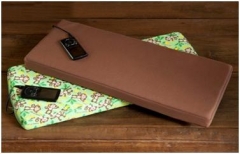
The iLs Pillow delivers processed music through a vibration which is carried by the body (our bones are great conductors). The music travels internally to the bony area surrounding the inner ear, and is audible only by the user. It is used to de-senstitize those with auditory sensitivity, reduce anxiety and improve sleep.
Wednesday, February 15, 2012
Ease App on Fox News
A quick note about the EASE listening therapy app from Vision-Audio.com. Fox News did a segment on the product. It can be seen at:
http://www.foxnews.com/health/2012/02/05/solution-for-sensory-disorders/
http://www.foxnews.com/health/2012/02/05/solution-for-sensory-disorders/
Wednesday, November 16, 2011
Therapeutic Listening and Ease
For those of you working with Therapeutic Listening, Vital Links, is now offering the entire Therapeutic Listening music library for $895 on a chip for use on an i-Pod-like device called Sansdisk ($49).
You can optionally purchase EASE for Sandisk - including EASE disks not offered by Vital Links - from visual-audio.com.
You can optionally purchase EASE for Sandisk - including EASE disks not offered by Vital Links - from visual-audio.com.
Sunday, November 6, 2011
The Ease people at Vision-Audio.com are coming out with iPod/iPad versions of the Ease sound therapy. You can checkout an early version of their lite, personal and professional version by searching on Electronic auditory stimulation effect. Here is information from their site. Sounds impressive. I downloaded the lite version for now and will blog about it at a later date.
The EASe app from Audioforge Labs and Vision-Play recreates the functionality of $10,000.00 hardware devices and in all parameters that we have measured, exceeds their performance. The EASe app even provides therapists setup parameters not found in hardware along with preset scenes to quickly get a therapist up and running helping patients.You can also download a free Ease CD Sampler and a cute Ease video game - children listen to the music while they play the game. It's a good motivator.Don't forget you need the good quality headphones. Free Ease Demo Game/CD.
Sunday, June 22, 2008
Auditory Fight or Flight
A large number of my pediatric clients have auditory issues. For most, the noise of a cafeteria or gym is too much to handle and they are put into fight or flight movement with unexpected or loud noises. They have been known to scream, run and cry in response to everyday situations making them very unpopular with teachers. In addition, they may talk to themselves or make unusual noises (vocal tics for example) that drive classmates nuts. These poor children have a very hard time making and keeping friends.
These sensory kids may or may not have autism - and it seems that a lot of them are on a sort of continuum from "typical" to "high functioning autism". My first step is to give the children strategies to keep their cool. I recommend earplugs (with a pediatrician's approval), or headphones in noisy environments. There are chewy necklaces and pencil grips that can provide them with oral input and serve to limit the vocal tics. Then I discuss ways to self-calm using breathing and focus on breathing. With one bright child, I explained what fight or flight means and suggested that she provide herself with self talk by telling herself that she is safe and that her reaction to noise is just an over-reaction by her body.
These strategies help, but not all children can use them independently. My next stage of therapy is twofold - vestibular stimulation and a listening program. We have Therapeutic Listening at our clinic.
Vestibular Stimulation
Given that the vestibular and auditory "organs" are in close physical proximity, it is common for a child with auditory issues to have vestibular problems as well. I look for dizziness or fear, and treat it by finding the plane (lateral, vertical, horizontal) and type of movement (rotational, linear, stationary, head down, etc) that makes the child dizzy or fearful. I then acclimate the child to the difficult positions and types of movement by alternating them with safe movement (usually linear swinging). I count out loud so that the child knows when the movements will start and end. This helps to remove fear. I have them check themselves for dizziness, and report on progress. These types of vestibular problems usually heal in just a few 15-minute sessions. It is harder to accomplish with a child with moderate-severe autism because they may not pay attention to what I am telling them (or may not initially trust me) and so go into a state of fear. The trick with them is to go slow and back off if it looks like it's going to backfire.
Listening Program
I am still new to listening programs, but have seen progress with my kids and my colleague's clients, too. Therapeutic Listening (TL), as I mentioned in another post, has 4 classes of CDs: self regulation, time and space, praxis and connectivity (to the environment). I use the self-regulation CDs to help reduce the fight or flight response and the time and space CDs to help with correcting the auditory imbalance itself. After that, I move to the connectivity CDs to try and help re-integrate the child into his/her environment, with the hope that it'll help with social issues.
The self-regulation CDs appear to make a person more passive - which can be good or bad. I tried a week's worth myself and had a friend do so, too. We both became noticeably calmer, but more passive. I stopped standing up for myself. I certainly don't want that to happen with my clients. So, when I see that symptom, I move to a third stage - Interactive Metronome (IM). Perhaps not a full program, but certainly enough to break the passivity and induce a shot of confidence. With one client, I moved in and out of TL and IM in the hopes that he would find an easy place to settle. It appears to have worked and he is discharged. I'll check back in a few months to see if he is still doing well.
These sensory kids may or may not have autism - and it seems that a lot of them are on a sort of continuum from "typical" to "high functioning autism". My first step is to give the children strategies to keep their cool. I recommend earplugs (with a pediatrician's approval), or headphones in noisy environments. There are chewy necklaces and pencil grips that can provide them with oral input and serve to limit the vocal tics. Then I discuss ways to self-calm using breathing and focus on breathing. With one bright child, I explained what fight or flight means and suggested that she provide herself with self talk by telling herself that she is safe and that her reaction to noise is just an over-reaction by her body.
These strategies help, but not all children can use them independently. My next stage of therapy is twofold - vestibular stimulation and a listening program. We have Therapeutic Listening at our clinic.
Vestibular Stimulation
Given that the vestibular and auditory "organs" are in close physical proximity, it is common for a child with auditory issues to have vestibular problems as well. I look for dizziness or fear, and treat it by finding the plane (lateral, vertical, horizontal) and type of movement (rotational, linear, stationary, head down, etc) that makes the child dizzy or fearful. I then acclimate the child to the difficult positions and types of movement by alternating them with safe movement (usually linear swinging). I count out loud so that the child knows when the movements will start and end. This helps to remove fear. I have them check themselves for dizziness, and report on progress. These types of vestibular problems usually heal in just a few 15-minute sessions. It is harder to accomplish with a child with moderate-severe autism because they may not pay attention to what I am telling them (or may not initially trust me) and so go into a state of fear. The trick with them is to go slow and back off if it looks like it's going to backfire.
Listening Program
I am still new to listening programs, but have seen progress with my kids and my colleague's clients, too. Therapeutic Listening (TL), as I mentioned in another post, has 4 classes of CDs: self regulation, time and space, praxis and connectivity (to the environment). I use the self-regulation CDs to help reduce the fight or flight response and the time and space CDs to help with correcting the auditory imbalance itself. After that, I move to the connectivity CDs to try and help re-integrate the child into his/her environment, with the hope that it'll help with social issues.
The self-regulation CDs appear to make a person more passive - which can be good or bad. I tried a week's worth myself and had a friend do so, too. We both became noticeably calmer, but more passive. I stopped standing up for myself. I certainly don't want that to happen with my clients. So, when I see that symptom, I move to a third stage - Interactive Metronome (IM). Perhaps not a full program, but certainly enough to break the passivity and induce a shot of confidence. With one client, I moved in and out of TL and IM in the hopes that he would find an easy place to settle. It appears to have worked and he is discharged. I'll check back in a few months to see if he is still doing well.
Friday, April 18, 2008
More about Listening & Rhythm
I continue to be pleasantly surprised at the results of Therapeutic Listening (TL) in my practice. The kids get calmer, attention improves, meltdowns decrease and with that, comes real growth. One boy used the headphones for just 4 weeks, and then Interactive Metronome (IM) for another several weeks. Mom reports that he is calm (TL) and has confidence in himself (IM). I've noticed increaed postural control and motor planning, too. Unfortunately, not all children can use TL. Some children do not tolerate headphones or the music through them at all - whether this is due to actual hearing problems such as tinnitus (ringing in the ear) or perhaps a severe tactile issue isn't always clear with some of our non-verbal population.
Therapeutic Listening and Interactive Metronome have overlapping territory in the area of motor planning - although each product works in a unique way. There is rhythmic feedback with IM in which the person actively attempts to increase their rhythmic precision. (See my entry about this, or check out the IM site.) TL is a passive system in which the person receives modulated auditory stimulation through rhythm and music. The therapist can add active components to TL therapy in the form of sensory stimulation, play or exercise.
A third program I have checked into is Samonas. I'll devote a blog to this at some future date. It comes from Germany and is a very high quality listening program that would appeal to adults as well as to children. There are 5 levels of CDs offered. Levels 1-4 require direction from a trained therapist. An introductory set of CDs is available to the general public. The recorded music and nature sounds are gorgeous. I tried a level 1 CD for 15 minutes and felt some powerful broad effects that included auditory refinement, emotional release and energy. I was pleased with it. Samonas offers a series of Listening Programs for the general public specifically aimed at areas including emotional, social, communication, organization, motor planning, etc. The Samonas web site can be very confusing. You can find web-based training programs for professionals at this location. They will be offering live training classes in the fall in New York and Florida. I'll write more when I get the details.
Therapeutic Listening and Interactive Metronome have overlapping territory in the area of motor planning - although each product works in a unique way. There is rhythmic feedback with IM in which the person actively attempts to increase their rhythmic precision. (See my entry about this, or check out the IM site.) TL is a passive system in which the person receives modulated auditory stimulation through rhythm and music. The therapist can add active components to TL therapy in the form of sensory stimulation, play or exercise.
A third program I have checked into is Samonas. I'll devote a blog to this at some future date. It comes from Germany and is a very high quality listening program that would appeal to adults as well as to children. There are 5 levels of CDs offered. Levels 1-4 require direction from a trained therapist. An introductory set of CDs is available to the general public. The recorded music and nature sounds are gorgeous. I tried a level 1 CD for 15 minutes and felt some powerful broad effects that included auditory refinement, emotional release and energy. I was pleased with it. Samonas offers a series of Listening Programs for the general public specifically aimed at areas including emotional, social, communication, organization, motor planning, etc. The Samonas web site can be very confusing. You can find web-based training programs for professionals at this location. They will be offering live training classes in the fall in New York and Florida. I'll write more when I get the details.
Thursday, February 7, 2008
Therapeutic Listening
Article
Hall, L. & Case-Smith, J. (2007). The effect of sound-based intervention on children with sensory processing disorders and visual-motor delays. American Journal of Occupational Therapy, 61, 209-215.
Leah Hall conducted a study with 10 children ages 5y 8m - 10y 11m who were diagnosed with sensory processing disorder (they were rated "Definitely different" in 3 or more areas of the Sensory Profile). Children were given home programs of four weeks with a sensory diet followed by 8 weeks of continued sensory diet with Therapeutic Listening. Significant results were found at the end of the first 4 weeks and at the end of the 12 weeks. Children gained an average of 71 points on the Sensory Profile with the biggest gains in the area of auditory processing and behaviors associated with sensory processing. Children with specific issues (such as auditory hyper-sensitivities, tantrums and hyperactivity made significant gains in some of those areas, as well). In addition, significant gains were made in handwriting (as assessed by the Etch program, and visual processing (as assessed by the VMI). Parents noticed large changes in overall behavior included improved attention, social interactions, self awareness, communication and sleep patterns. One child on medication for ADHD was given a reduction in dosage.
Hall, L. & Case-Smith, J. (2007). The effect of sound-based intervention on children with sensory processing disorders and visual-motor delays. American Journal of Occupational Therapy, 61, 209-215.
Leah Hall conducted a study with 10 children ages 5y 8m - 10y 11m who were diagnosed with sensory processing disorder (they were rated "Definitely different" in 3 or more areas of the Sensory Profile). Children were given home programs of four weeks with a sensory diet followed by 8 weeks of continued sensory diet with Therapeutic Listening. Significant results were found at the end of the first 4 weeks and at the end of the 12 weeks. Children gained an average of 71 points on the Sensory Profile with the biggest gains in the area of auditory processing and behaviors associated with sensory processing. Children with specific issues (such as auditory hyper-sensitivities, tantrums and hyperactivity made significant gains in some of those areas, as well). In addition, significant gains were made in handwriting (as assessed by the Etch program, and visual processing (as assessed by the VMI). Parents noticed large changes in overall behavior included improved attention, social interactions, self awareness, communication and sleep patterns. One child on medication for ADHD was given a reduction in dosage.
Subscribe to:
Posts (Atom)