Researchers at Bringham Young University showed that children with autism hang on to the association of fear for a particular object long after other children have let it go. In a series of trials, children were given a puff of air in the face after seeing a yellow card. All of the children registered fear when shown a yellow card. At some point the card associated with the puff of air was switched to a differerent color. Typical children figured this out quickly and soon lost their distrust of the yellow card. Children with autism continued to be fearful of the yellow card long after the others. The length of time they stayed fearful was related to the severity of thier autism diagnosis.
The authors conclude that this heightened sense of fear ("anxiety", in their words) is not just associated with autism but is an integral part of it.
References:
1. Synopsis can be found at Science Daily: Mind and Brain
2. Mikle South, Tiffani Newton, Paul D. Chamberlain. Delayed Reversal Learning and Association With Repetitive Behavior in Autism Spectrum Disorders. Autism Research, 2012; DOI: 10.1002/aur.1255
Friday, November 30, 2012


Thursday, November 22, 2012
Do you REALLY think he has Asperger's?
Check out New York Magazine article, Are You On It? .... If so, you're in good company. From Asperger's to "Asperger's", how the spectrum became quite so all-inclusive about ? Finally someone shaking a finger at those who would lightly diagnose husbands, colleagues, politicians or themselves with the disorder.
Thursday, November 1, 2012
iLs Pillow Insert
Just received an email about a new sleep product from iLs that helps with auditory sensitivity. It is priced at $295 and available for purchase by parents. It is described as follows:
The iLs Pillow delivers processed music through a vibration which is carried by the body (our bones are great conductors). The music travels internally to the bony area surrounding the inner ear, and is audible only by the user. It is used to de-senstitize those with auditory sensitivity, reduce anxiety and improve sleep.
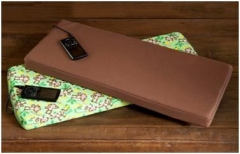
The iLs Pillow delivers processed music through a vibration which is carried by the body (our bones are great conductors). The music travels internally to the bony area surrounding the inner ear, and is audible only by the user. It is used to de-senstitize those with auditory sensitivity, reduce anxiety and improve sleep.
Patterns of Early Development in Autism
Follow this link to a short article on the normal development cycle for a child with autism. In fact, there are two development cycles - one for children with an early diagnosis of autism (14 months) and the other for children who are typically identified between 24 - 36 months of age.
References:
References:
1. Rebecca J. Landa, Alden L. Gross, Elizabeth A. Stuart, Ashley
Faherty. Developmental
Trajectories in Children With and Without Autism Spectrum Disorders: The First
3 Years. Child
Development, 2012; DOI: 10.1111/j.1467-8624.2012.01870.
Tuesday, October 30, 2012
Sally Rogers and the Early Start Denver Model
Here is short article about Sally Rogers' Early Start Denver Model (ESDM). Children with autism who are not typcially diagnosed until age 2.5 can stagnate and miss fertile developmental opportunities. In fact, we know how to diagnose at much earlier ages (there are at least two methods for making a diagnosis at 6 months) and so have a window of opportunity to work with children at a much earlier age.
Dr. Rogers and her colleagues have developed an intense program that combines Play, Behavioral Therapy and Relationship Therapy to help children make gains at 18 months. Her team at the Mind Institute in Sacramento is seeing tremendous results that include speach gains. In fact, 90-95% of children coming through the Mind Institute's program begin speaking at age 3 - 3.5.
Here is the transcript of a PBS interview with Dr. Rogers.
Thursday, October 11, 2012
Do Weighted Vests Work? Two Studies
Last year, two widely different studies published in AJOT (American Journal of OT)
looked at the effectiveness of a weighted vest in increasing the on-task
behavior in children with poor attention. One study showed an effective protocol,
the other showed a protocol that did not work. Let's look at the methods used in the studies.
What didn’t work
In study 1, by Collins and Dworkin, children wore a standard commercial
vest (based on the size of the child) for 15 or more minutes (the length of an
activity). Filming of the child’s behavior was started after a 5 minute
adjustment period. The recording was 10 minutes long. A total of 9 sessions
were recorded over a period of 3-6 weeks.
To make that clear, each child
wore a weighted vest for approximately 15 minutes on each of 9 days. They did
not wear a weighted vest at other times. The authors report that their weighted
vest protocol did not improve attention to task. By the way, these children
were typical children in elementary school. No further information is given
about them including whether or not they were known to have sensory issues or
had been diagnosed with ADHD.
What appears to work
Study 2, by Fertel-Daly, et. al., had children with autism
ages 2-4 in a pre-school program wear similar vests for 2 hours on and then two
hours off. Children wore the vests 3 days a week. They were given 3 weeks of
this protocol to adjust to the vests prior to filming behaviors. All
participants had an increase in attention. The smallest child had the best
increase, suggesting that the ratio of the child’s body weight to the weight in
the vest made a difference. Teachers noted that the level of aggression and
self-stimming behaviors were noticeably reduced at the end of the study. The children's attention skills improved overall by the end of the study and did not return to baseline once the vest was discontinued.
Conclusions that Need Re-Validation
1.
The art of “how much weight to use in a vest”
says that 5-10% of the child's bodyweight works best. In study 2, the smallest girl used weight equal to
4% of her body weight – and it worked. Other students who had less vest weight still had good results, but not as good.
2.
Vests are more effective when used consistently
over time. Even 3 days a week is effective, but the gains increase as the weeks
go by.
3.
The method of 2 hours on and 2 hours off appears
to work. A vest that is worn for 15 minutes (as needed) is not effective.
4.
The weighted vests appear to help pre-schoolers with autism.
Would it help elementary children with autism?
5. Children with autism tend to have sensory issues. It makes sense that a vest (a sensory solution) was successful for them. Would it also work for a small child with ADHD?
6. In the second study, the children's attention skills improved - and did not return to baseline. What would happen if the protocol were continued? Would the children lose those symptoms?
So many
questions, so few answers. Ah, to have a large group, long term study!
References
1.
Collins, A., & Dworkin, R. J. (2011). Pilot
study of the effectiveness of weighted vests. American Journal of Occupational Therapy,
65, 688–694.
2.
Fertel-Daly, D., Bedell, G., & Hinojosa, J.
(2001). Effects of a weighted vest on attention to task and self-stimulatory
behaviors in preschoolers with pervasive developmental disorders. American
Journal of Occupational Therapy, 55, 629–640.
Monday, September 17, 2012
In the News ...
Here are a couple of interesting news items you may have missed. I found these on the Science Daily news service over the weekend.
Second-Hand Smoking Affects Neurodevelopment in Babies
How does it affect the baby? ..."poor physiological, sensory, motor and attention responses". Read it - it's an eyeful.
Disorder of Neuronal Circuits in Autism Is Reversible, New Study Suggests
Scientists have found an impaired set of circuitry affecting many symptoms of autism and have reversed the problem in mice. This gives hope that we may be able to do the same in humans once we are better at pinpointing brain chemical therapy to a given small region. A breakthrough in that technique was also reported last week.
You can subscribe to email delivery of ScienceDaily at this site. They also have an RSS Newsfeed.
Subscribe to:
Posts (Atom)